Newport Coast: a neighborhood guide to the hills above the Pacific
Newport Coast is the youngest part of Newport Beach and the least understood. It is not one neighborhood but a master-planned district of gated enclaves folded into the San Joaquin Hills, with Crystal Cove State Park at its feet and protected open space on nearly every ridge. This guide covers how it came to be, how it is organized, and what daily life actually looks like there.
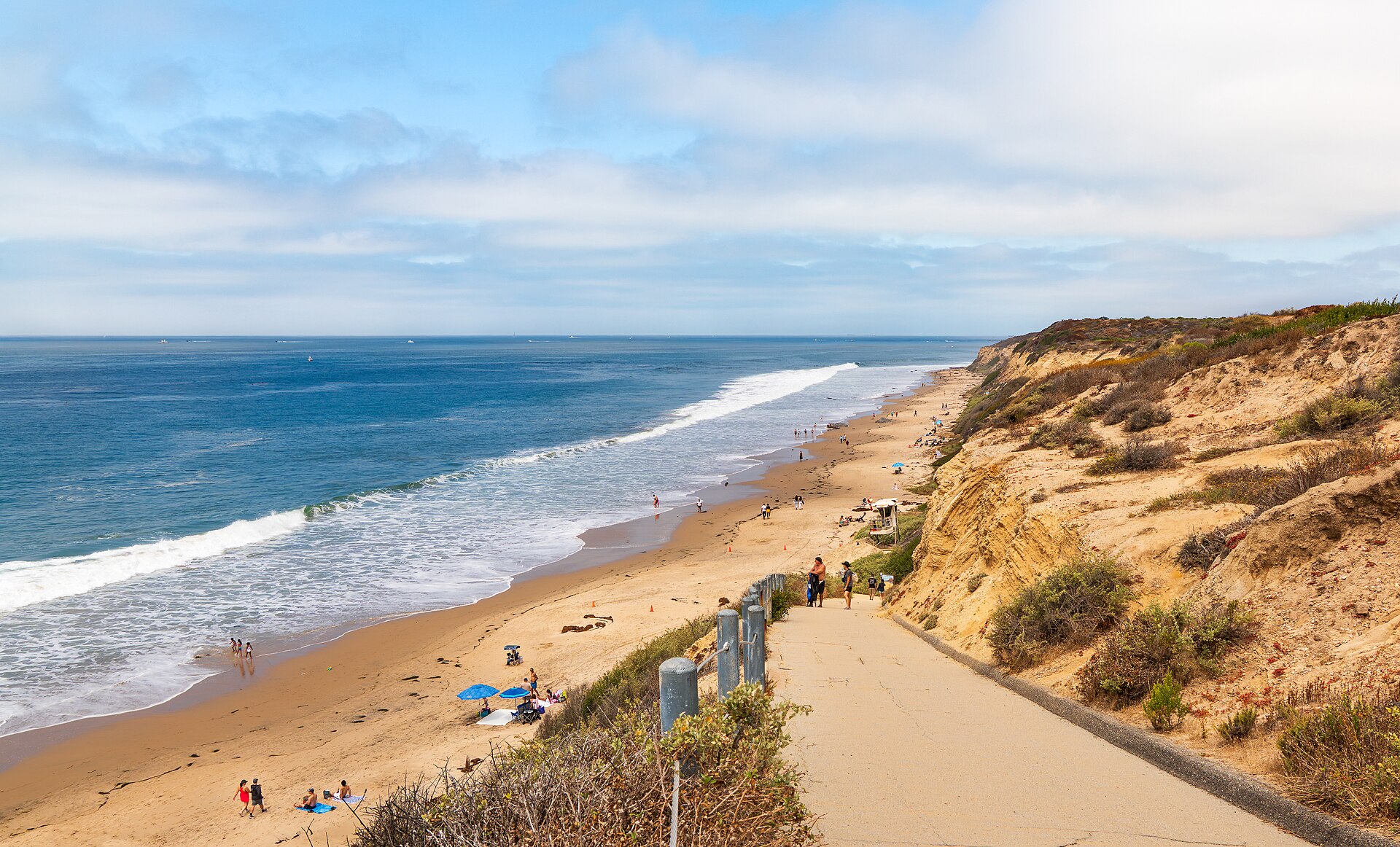
Crystal Cove State BeachNorbert Nagel · CC BY-SA 4.0 · cropped
A planned community with a short, documented history
Modern Newport Coast began construction in 1990 on former Irvine Ranch land, developed by the Irvine Company as a master-planned community. On January 1, 2002, the area was annexed into the City of Newport Beach—an event covered by the Los Angeles Times at the time—which is why Newport Coast carries a Newport Beach address while feeling distinctly its own place.
City planning documents describe Newport Coast as a planned community of roughly 9,400 acres, with the great majority—around 7,300 acres—dedicated to open space and recreation, including Crystal Cove State Park and wilderness dedications. That ratio is the defining fact of the district: the homes occupy the terraces and ridges, and the canyons between them are largely preserved.
How the enclaves fit together
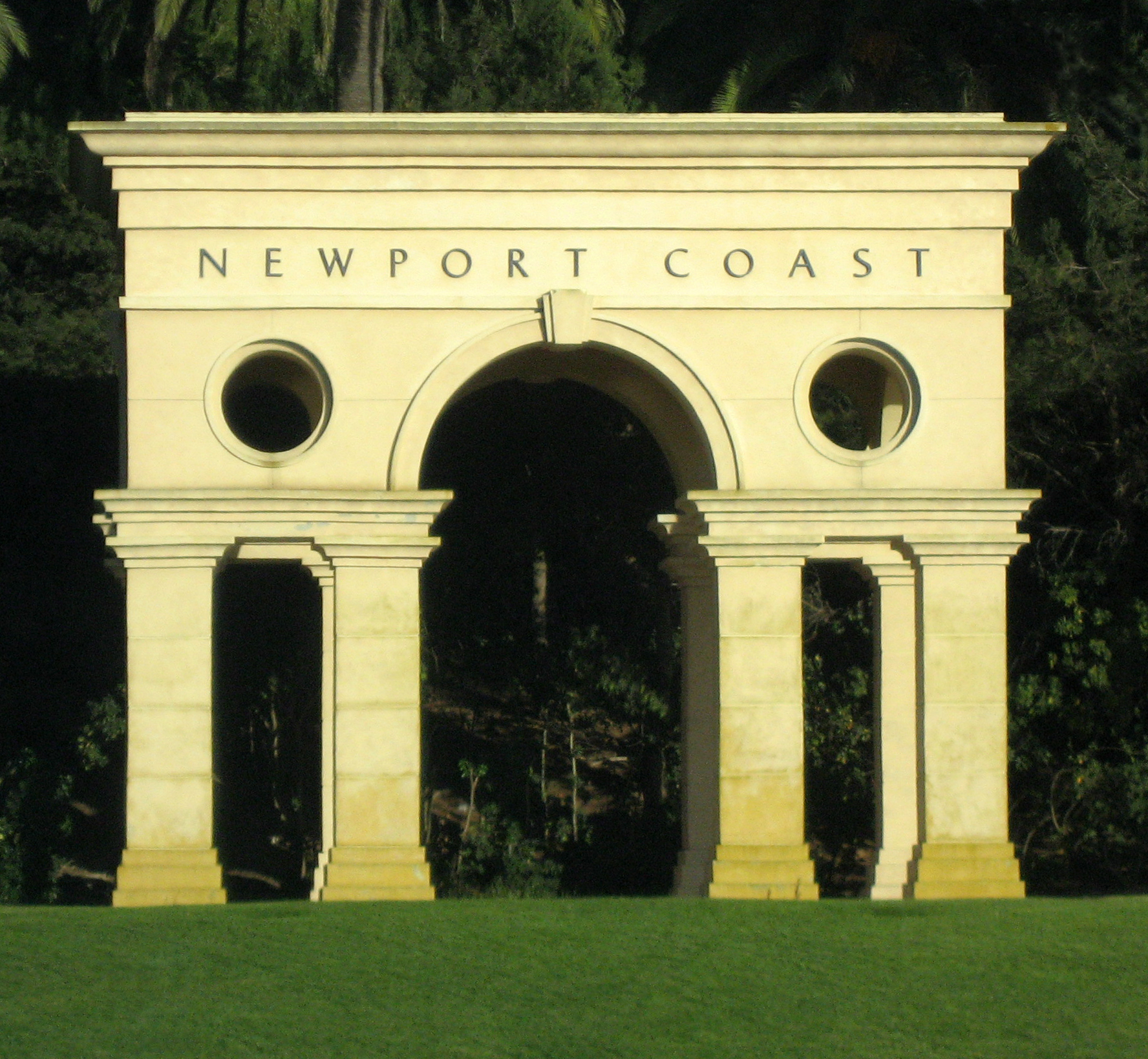
The Newport Coast entrance archJonnyboyca · Public domain · cropped
Newport Coast is best read as a collection of separate communities, each with its own association and gate structure. Crystal Cove sits above the state beach, with guard-gated streets and many ocean-oriented homes. The Pelican neighborhoods—Pelican Crest, Pelican Ridge and Pelican Point among them—wrap around the Resort at Pelican Hill and its golf courses. Pacific Ridge and Ziani occupy the southern reaches, while Newport Ridge and enclaves such as Ocean Heights, Tesoro, Santa Lucia, Altezza and Trovare fill the hillsides along Newport Coast Drive.
The practical implication for buyers and residents: two homes with a Newport Coast address can belong to entirely different associations, with different gates, dues and rules. Community association records describe a master association covering roughly 1,600 residences across about twenty subdivisions, with separate gate cost centers. Always confirm which associations a specific home belongs to before drawing conclusions about costs or amenities.
- Which master and sub-associations govern the specific home?
- Guard-gated, gated or open—and who staffs the gate?
- Current dues at each association level, and what they cover.
- View orientation, lot position and proximity to open space.
Daily life: beaches, trails and the village essentials

Newport Harbor at sunriseDon Ramey Logan · CC BY 4.0 · cropped
The district’s backyard is Crystal Cove State Park, whose beaches, historic cottage district and backcountry trails sit directly below and beside the community. The Resort at Pelican Hill anchors the center of Newport Coast with its golf courses and dining, and the Crystal Cove Shopping Center and Newport Coast Shopping Center cover everyday errands along Pacific Coast Highway and Newport Coast Drive.
Getting around is simple in one direction and deliberate in the other: Pacific Coast Highway runs along the water toward Corona del Mar and Laguna Beach, while the 73 toll road connects inland. Most residents plan their days around that geography—beach and village to the west, freeways and employment centers to the east.
A closer look at the enclaves
Crystal Cove is one of the most recognized Newport Coast communities, with guard-gated streets above Crystal Cove State Park and many ocean-oriented homes. Its location close to the state park and Pacific Coast Highway makes it popular with buyers who want beach access nearby.
The Pelican neighborhoods surround the Resort at Pelican Hill and its golf courses. Elevation and outlooks over the ocean and fairways are common themes here, and homes range from large estates to more modest residences depending on the specific enclave.
Farther inland, Newport Ridge and the communities along Newport Coast Drive offer a mix of homes, townhomes and condominiums, some with views and community amenities. These areas can provide a different price range and lifestyle within the same Newport Coast address.
Housing types and price ranges
Newport Coast includes estate homes, single-family homes in planned enclaves, townhomes and condominiums. That range means the district is not only for the very top of the market, although its most visible homes certainly are.
Prices vary widely depending on the enclave, view, lot, home size and condition. Rather than relying on general averages, it is better to look at recent closed sales in the specific community you are considering.
Some buyers start in a townhome or condominium community and later move to a single-family enclave. Others choose Newport Coast specifically for lower-maintenance living with community amenities.
Crystal Cove State Park up close
Crystal Cove State Park covers miles of coastline and a large inland wilderness area. Its beaches, tide pools and underwater park make it a favorite for swimming, snorkeling and exploring. The inland trails are popular with hikers and mountain bikers.
The Crystal Cove Historic District preserves a collection of early-twentieth-century beach cottages, some of which can be rented overnight through the park’s reservation system. Nearby dining, including the Beachcomber Cafe, adds to the area’s appeal.
For Newport Coast residents, having the park so close is one of the defining parts of daily life. Many people walk, run or bike there regularly, and it remains open space by design.
Schools and family life
Newport Coast is served by public schools in the Newport-Mesa Unified School District, and families also consider a variety of private schools in the surrounding area. School assignments depend on the specific address, so it is important to confirm them directly with the district.
Community parks, pools and recreation facilities within some enclaves add to family life. Youth sports, beach programs and the trail system give families many ways to stay active close to home.
Because Newport Coast is spread across hills, daily routines often involve driving. Families tend to plan school, activities and errands with that in mind.
- Confirm assigned public schools with the district for the specific address.
- Check which community amenities belong to the home’s associations.
- Map the daily drive to school, work and activities.
Wildfire, insurance and the hillside setting
Like many hillside communities next to open space in Southern California, parts of Newport Coast face wildfire considerations. Fire hazard designations, defensible-space requirements and insurance availability can all be part of the buying process.
Ask about the home’s fire hazard designation, defensible-space practices and any association rules on landscaping and fire safety. Request insurance quotes early, since availability and cost can vary by property.
Hillside homes also deserve attention to slope stability and drainage. A qualified inspector or geotechnical professional can help you understand any specific concerns.
Shopping, dining and nearby essentials
The Crystal Cove Shopping Center and Newport Coast Shopping Center cover groceries, dining and everyday services close to home. The Resort at Pelican Hill adds resort dining and spa options.
Fashion Island and Newport Center, a short drive west, provide a full range of shopping, restaurants and offices. Corona del Mar’s village is also close by for coffee, restaurants and walkable errands.
For medical care, travel and business, Newport Coast residents often rely on nearby Newport Beach, Irvine and John Wayne Airport, all within a reasonable drive outside peak hours.
How to explore Newport Coast before buying
Start with a drive along Newport Coast Drive to see how the enclaves sit on the hills. Then visit Crystal Cove State Park and walk the beach or a trail to understand the setting.
Because many communities are gated, you will usually need an agent or an appointment to tour homes inside. Seeing a few different enclaves on the same day can make the differences clear quickly.
Finally, compare not only the homes but also the associations, gates, amenities and monthly costs. In Newport Coast, those details are part of the lifestyle.
The Mr_Newport perspective
Michael Mena, Douglas Elliman, California DRE #01948813, counts Newport Coast among his primary areas alongside Newport Beach and Corona del Mar. He reports more than $250 million in career sales volume and over 13 years of industry experience; those are owner-supplied career figures, not independently audited on this site.
If you are comparing enclaves, start with the lifestyle question—view, beach access, gate preference, maintenance level—then test it against the association structure and a dated set of closed sales in that specific community. Newport Coast rewards buyers who read it neighborhood by neighborhood rather than as a single market.