What a $5M ocean view actually looks like in Newport Coast
“Ocean view” is the most flexible phrase in coastal real estate. In Newport Coast it can mean a panoramic, sit-down view of Catalina from a ridge-line lot—or a blue sliver between two rooftops that disappears when the neighbor’s trees grow in. At the $5 million mark, understanding which version you are being shown matters more than the number itself.
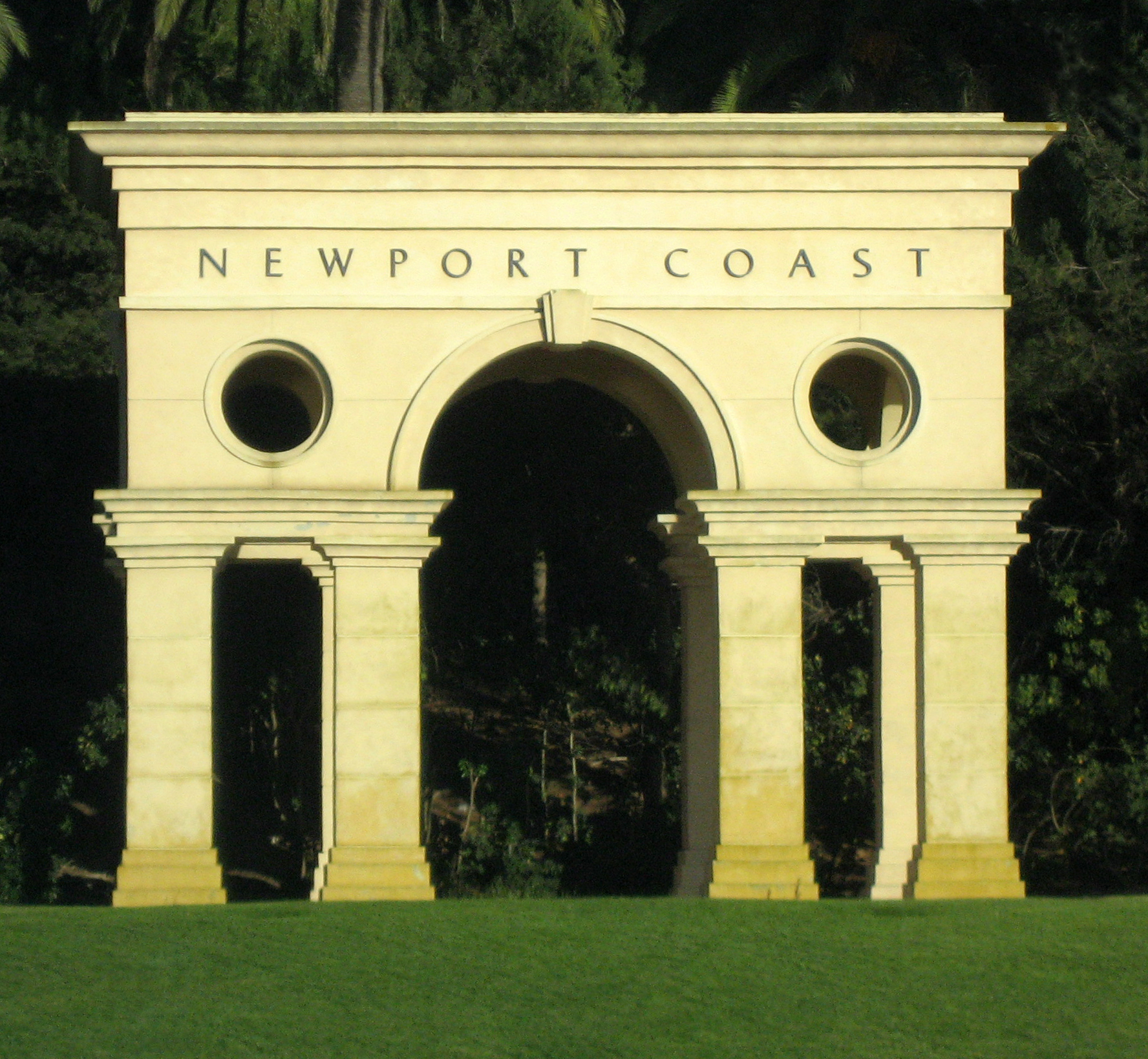
The Newport Coast entrance archJonnyboyca · Public domain · cropped
Not all ocean views are the same view
Before price per square foot enters the conversation, classify the view. A panoramic view takes in open water, coastline and often Catalina Island from the main living spaces. A sit-down view holds from the living room sofa, not just from a balcony rail. A peek view is a corridor of blue that depends on a specific angle—and on what a neighbor may someday build or plant in front of it.
Ask your agent to describe the view the way an appraiser would: from which rooms, at what elevation, over what foreground. A view over a protected canyon or a golf fairway ages differently than a view over a buildable downslope lot. The question is not just what you see today, but what can legally stand between you and the water tomorrow.
Where the $5M conversation usually happens

Crystal Cove State BeachNorbert Nagel · CC BY-SA 4.0 · cropped
Newport Coast is a collection of distinct enclaves, and the same budget buys very different combinations of view, lot and square footage in each. Crystal Cove offers guard-gated streets above the state beach, with many homes oriented toward the water. The Pelican Hill neighborhoods—Pelican Crest, Pelican Ridge and the streets around the resort—trade on elevation and wide ocean and fairway outlooks. Pelican Ridge and the Canyon area can offer view homes at different price points than the front-row ridges.
The trade-offs are real and worth naming. A larger home on an interior lot may carry a partial view; a smaller home on a front-row lot may carry the panorama. Some enclaves add association dues and gate staffing to the monthly picture. None of these is a universal answer—the right combination depends on whether you are buying the view, the space, the privacy or the address.
- Which enclave, and what does the same budget buy in the others?
- Panoramic, sit-down or peek—and from which rooms?
- What stands between the home and the water, and who controls it?
- Association dues, gate and community obligations in the monthly picture.
What the number does not tell you

Newport Beach and its harbor from aboveWPPilot · CC BY-SA 4.0 · cropped
Two homes at the same price can sit months apart in terms of condition. In a coastal climate, salt air is hard on finishes, windows and exterior metalwork, so the age of a renovation matters as much as its style. Ask for the permit history and the dates of major work, and treat inspection findings as part of the price conversation, not an afterthought.
Days on market and price history also read differently at this level. A long listing is not automatically a problem home—sometimes it is simply a price the market has already answered. The useful question is what the evidence says: which comparable view homes have actually closed, at what terms, and how does this one differ?
How to tour a view home
Visit a view home more than once and at different times of day. Morning marine layer can hide the coastline, while late afternoon light can make the ocean look its best. Seeing the home in more than one condition helps you understand what you will actually live with.
Walk every main room and note where the view appears. Is it visible from the kitchen and living room, or only from a balcony? Can you see it while seated? Does it hold from the primary bedroom?
Step outside and look back toward the home and the surrounding lots. Notice trees, rooflines and empty lots that could change the view over time.
- Tour in the morning and in the late afternoon if possible.
- Note the view from each main room, standing and seated.
- Look for trees and buildable lots in the view corridor.
Protecting a view: what to ask
In many Newport Coast communities, homeowner associations have rules on landscaping, building height and architectural changes that can help protect views. These rules differ from one association to another, and they may not protect every view in every direction.
Ask for the governing documents and any view or landscaping guidelines before you commit. Look at how disputes are handled and whether the association has a record of enforcing its rules.
Consider what lies downhill. A view over a protected open-space canyon or golf course is generally more stable than a view across a lot where a new home or addition could be built.
Newport Coast associations and monthly costs
Most Newport Coast homes belong to a master association and, often, a sub-association for the specific enclave. Together, these can cover gate staffing, common-area landscaping, private streets and amenities. The amounts vary by community and can change over time.
Some properties also carry special assessments or community facilities district charges, which can appear on the property tax bill. Ask for the current dues, any recent or planned special assessments and the tax bill so you see the full monthly picture.
When you compare a home in a guard-gated enclave with one in a non-gated area, include these costs alongside the price. They are part of what you are buying.
- Master and sub-association dues, confirmed in writing.
- Any special assessments, recent or planned.
- Community facilities district or similar charges on the tax bill.
- What the dues cover, including gate staffing and amenities.
Condition, maintenance and the coastal climate
Much of Newport Coast was built from the 1990s onward, which means many homes are now old enough to need roof, window, plumbing or mechanical updates. Some have been renovated beautifully; others still have original systems.
Ocean air can accelerate wear on exterior metal, windows, doors and finishes, especially on elevated lots facing the water. A thorough inspection, and specialized inspections where appropriate, can help you understand the condition and future costs.
Hillside homes may also deserve attention to drainage, retaining walls and slope conditions. Ask your inspector whether a geotechnical review makes sense for the specific property.
Financing and insurance at this price point
At around $5 million, many buyers use jumbo financing or pay cash. Lenders may have specific requirements for reserves, appraisals and documentation, so it is worth speaking with a lender early.
Insurance has become an important part of the California home-buying conversation. Availability and cost can vary by location and property, and some buyers have needed to explore more than one option. Ask an insurance professional for a quote early in your search, before you are under contract.
Property taxes in California are generally based on the purchase price under Proposition 13, plus any local assessments. Your tax adviser can help you estimate the ongoing cost.
Making a competitive offer
For well-priced view homes, buyers may face competition. A strong offer is not only about price. Financing certainty, deposit size, reasonable contingency periods and flexible timing can all make an offer more appealing to a seller.
Before you write an offer, review the disclosures and reports that are available, and decide which questions you need answered during your inspection period. Your agent should help you understand how the home compares with recent closed sales so you know where your offer stands.
If a home has been on the market for a while, the conversation may be different. Recent price changes, feedback and the seller’s situation can all shape negotiations.
Is a $5M view right for you?
Some buyers would rather have a larger home with a partial view; others would trade space for a front-row panorama. Neither choice is wrong. The best decision usually comes from knowing which you will value more every day.
It can help to rank your priorities before touring: view, interior space, yard, privacy, gate, walkability to the beach and monthly costs. Then compare each home against that list rather than against the listing description.
Newport Coast offers many versions of the ocean-view lifestyle. Taking the time to understand them makes it much easier to recognize the right home when you see it.
How I walk a buyer through it
Michael Mena, Douglas Elliman, California DRE #01948813, works across Newport Coast alongside Newport Beach and Corona del Mar. He reports more than $250 million in career sales volume and over 13 years of industry experience; those are owner-supplied career figures, not a promise about any individual purchase.
A first conversation about a Newport Coast view home starts with the view classification, the enclave trade-offs and a dated set of relevant closed sales—not with a pressure timeline. If you are weighing a purchase on this coast, bring the address and your priorities, and expect the evidence to lead the discussion.