Corona del Mar: the complete neighborhood guide to Newport Beach’s village by the sea
Corona del Mar is the part of Newport Beach people describe with their hands—a sweep toward the bluffs, a point down a flower-named street, a shape in the air for the curve of the main beach below Inspiration Point. It is small enough to walk and varied enough that two homes a few blocks apart can feel like different towns. This guide is a long read on purpose. It covers how Corona del Mar came to be, how its neighborhoods differ, what daily life is actually like, and the practical questions that matter when you are thinking about living here. Throughout, the goal is to describe the place honestly, so you can decide whether it fits the way you want to live.
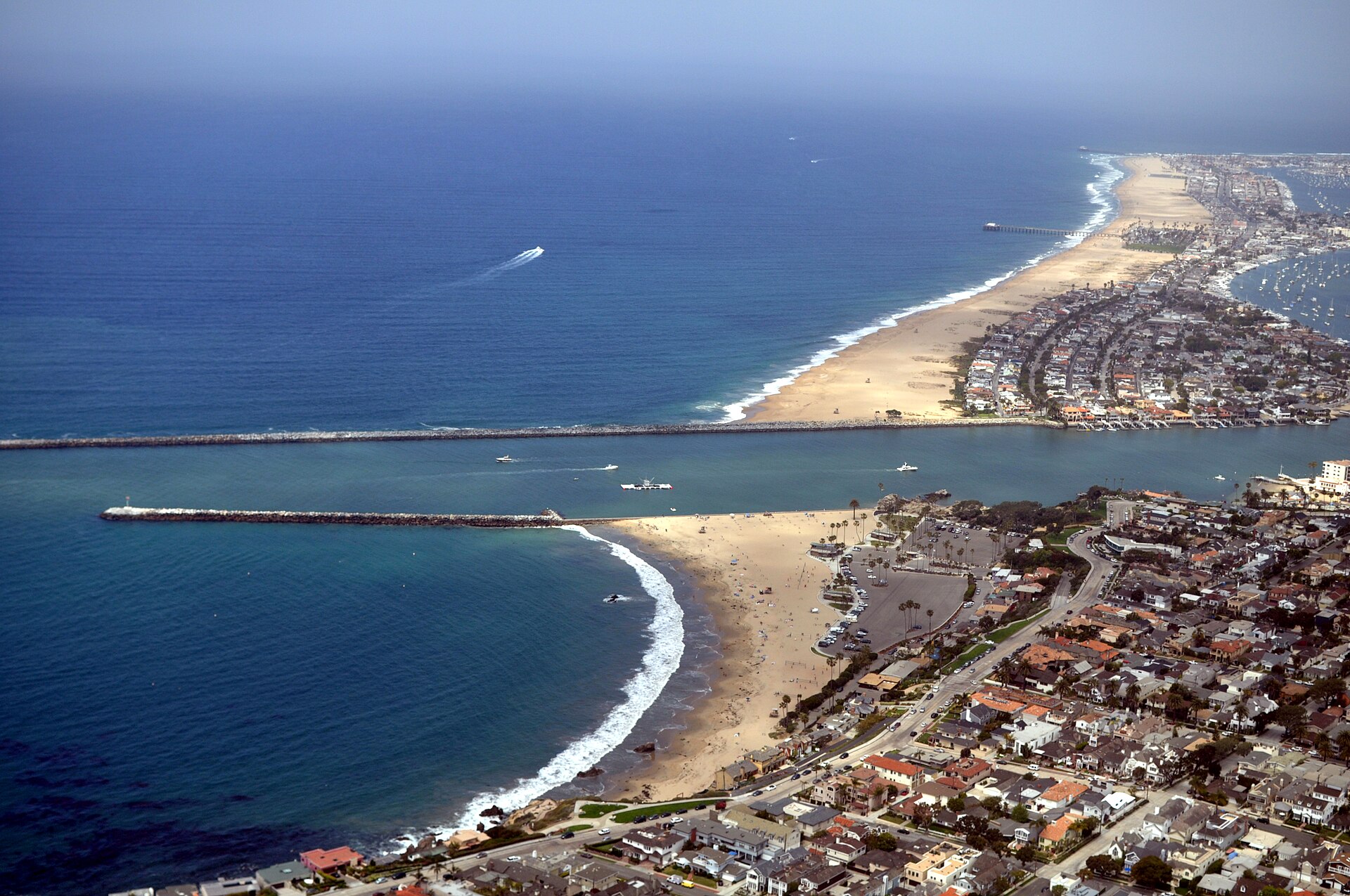
Corona del Mar State BeachDon Ramey Logan · CC BY-SA 3.0 · cropped
The name, the history and how the village grew
Corona del Mar translates loosely from Spanish as “crown of the sea,” a fitting name for a community that sits on bluffs above the Pacific at the eastern edge of the entrance to Newport Harbor. The area was promoted as a seaside subdivision in the early twentieth century, when Southern California developers were selling the idea of coastal living to buyers from Los Angeles and beyond. For years, getting there was its own adventure: the harbor entrance had not yet been fully improved, and the drive along the coast was nothing like today’s Pacific Coast Highway.
Corona del Mar became part of the City of Newport Beach in the 1920s, and it has remained a section of the city rather than an independent town ever since. That matters in practical terms. Residents are served by Newport Beach city services, police, fire and lifeguards, and properties carry Newport Beach planning and zoning rules. Yet the community has kept its own identity, its own post office ZIP code of 92625 and a village feel that locals defend with real conviction.
Much of what you see today grew up in waves. The original village grid filled in through the mid-twentieth century with modest beach cottages, many of which have since been rebuilt or remodeled. Later decades brought the bluff and hillside neighborhoods to the east and north, where larger lots and planned streets created a different character. Walking from the village to Cameo Shores or up into Harbor View Hills is a quick lesson in how coastal Orange County evolved: from small cottages, to mid-century custom homes, to contemporary architecture on carefully protected view lots.
Reading the map: how Corona del Mar is organized
The simplest way to understand Corona del Mar is to think of Pacific Coast Highway as the spine. The highway runs east to west through the community, lined with the restaurants, coffee shops, boutiques, galleries and services that make up the commercial village. Ocean-side of the highway lies the classic village grid and the bluff streets above the beaches. Inland of the highway, the land rises into hillside neighborhoods with harbor, city-light and ocean views.
To the west, Corona del Mar meets the harbor along Bayside Drive and the waterfront enclaves near the harbor entrance. To the east, the coast continues past Little Corona and the Cameo neighborhoods toward Crystal Cove and Newport Coast. That geography is why Corona del Mar residents often feel they have three settings within a short drive: the harbor, the open ocean and the protected coastline of Crystal Cove State Park.
The neighborhoods inside that frame do not all share the same rules, lot sizes or associations. Some are part of the original village grid with no homeowners association at all. Others are planned communities with associations, architectural review and in some cases private beach or recreation access. Understanding which kind of neighborhood a specific home sits in is one of the first things worth confirming.
The village and the flower streets
The heart of Corona del Mar for many people is the village south of Pacific Coast Highway, where the cross streets run in alphabetical order and are named after flowers: Acacia, Begonia, Carnation, Dahlia, Fernleaf, Goldenrod, Heliotrope, Iris, Jasmine, Larkspur, Marguerite, Narcissus, Orchid, Poppy and beyond. Locals give directions by the alphabet, and the effect is charming in a way that is hard to manufacture.
Homes in the flower streets tend to sit on relatively narrow lots, close to their neighbors, with alleys behind many blocks for garages and services. That density is part of the appeal. People walk to coffee in the morning, walk to dinner at night and walk down to the beach in between. A remodeled cottage, a newer custom home and a duplex can share one block, which gives the streets a varied, lived-in character instead of a uniform look.
The trade-offs are the predictable ones in a walkable coastal village. Parking can be tight, especially in summer and on weekends when beachgoers arrive. Yards are generally modest. Construction is constant because so many older homes are being rebuilt, and that means noise and street activity in some seasons. For buyers who prioritize walkability and a sense of community over lot size and privacy, those trade-offs are often worth it.
The streets closest to Ocean Boulevard deserve their own mention. Ocean Boulevard runs along the top of the bluffs, and homes on the ocean side of the street can carry dramatic views over Corona del Mar State Beach, the harbor jetty and the open Pacific. These are some of the most visible homes in the community, and they come with considerations—bluff conditions, coastal permitting and public views—that are specific to their location.
- Is the home inside the original village grid, and is there an alley behind it?
- How far is the walk to the beach, the highway shops and your daily coffee?
- What do parking and street activity look like on a summer Saturday?
- Has the lot been rebuilt recently, and what is being built on neighboring lots?
Cameo Shores, Cameo Highlands and Shore Cliffs
East of the village, past Little Corona, the coastline turns into a series of planned bluff neighborhoods. Cameo Shores is one of the best known. Its streets run along and above the ocean, and many homes are oriented toward water views. It is a community with an association, and buyers often ask about access to the shoreline below; the specific rights that come with a property should always be confirmed through the association documents rather than assumed from a listing description.
Cameo Highlands sits inland of the highway in the same general area, on rising ground that can offer ocean and coastline views from elevated lots. Shore Cliffs, closer to the village, is another bluff-top community with its own association and a quieter, more residential feel than the flower streets. Each of these neighborhoods trades some walkability for larger lots, more privacy and in many cases more consistent architectural standards.
What ties these communities together is the relationship to the water. Bluff-top living is spectacular, but it comes with specific questions: how the bluff has been engineered and maintained, what rules govern construction near the edge, what view protections exist and how the association handles shared areas. Those are not reasons to avoid the neighborhoods; they are reasons to read the documents carefully and bring the right inspectors.
- Which association governs the home, and what do the governing documents say about shoreline access?
- Has a geotechnical review been done for bluff-adjacent properties?
- What view, height or architectural rules apply to the home and its neighbors?
- Current association dues and what they cover.
Harbor View Hills, Spyglass Hill and the hillside neighborhoods

The Cameo Shores shorelineAustin Neill · CC0 · cropped
North of Pacific Coast Highway, the land climbs into a group of hillside communities. Harbor View Hills is named for exactly what it offers on many lots: views over the harbor, the city and in some locations the ocean. Spyglass Hill sits higher still, with homes arranged along curving streets and many oriented toward expansive coastline and city-light views. These neighborhoods feel more suburban than the village—quieter streets, larger homes and more space between neighbors—while staying a short drive from the beach.
Other hillside and inland neighborhoods, including Corona Highlands and the areas near Jasmine Creek and Irvine Terrace on the harbor side, add more variety. Some are known for mid-century architecture; others for newer construction or planned-community amenities like pools, tennis courts and greenbelts. Many have associations with architectural review, which can protect a neighborhood’s look and views while also limiting what an owner can build.
The hillside neighborhoods often appeal to families and buyers who want more interior space, a usable yard and quieter evenings, while still having the village and the beach within a few minutes. The key questions here revolve around view orientation, slope, the age and condition of the home and the specific rules of the association.
The beaches, coves and tide pools
Corona del Mar State Beach, often called Big Corona, is the community’s main beach. It sits below the bluffs at the harbor entrance, protected by the jetty, which tends to make the water calmer than more exposed beaches. There are fire rings, volleyball courts, a large parking lot, lifeguards and a long stretch of sand that fills with families in summer. It is also one of the best places to watch boats enter and leave Newport Harbor.
Just east, Little Corona del Mar Beach is a smaller, more intimate cove known for tide pools and rock formations, including the arch rock offshore. The area is part of a protected marine environment, and visitors are asked to look rather than collect: tide-pool life should be left where it is, and it is best explored at low tide with good shoes. Parking is mostly on the surrounding streets, and access is down a path from Ocean Boulevard.
Above both beaches, Inspiration Point and Lookout Point are two of the most photographed overlooks in Orange County. Inspiration Point looks down over Pirate’s Cove and Corona del Mar State Beach, while Lookout Point frames the harbor entrance and jetty. Locals use them for morning walks, sunset views and, during the right season, watching for migrating whales offshore.
On the harbor side, China Cove is a small, sheltered beach tucked along Ocean Boulevard near the harbor entrance, with calm water and views of passing boats. It is a quieter alternative when the main beach is busy, though space and parking are both limited.
Gardens, culture and the village essentials
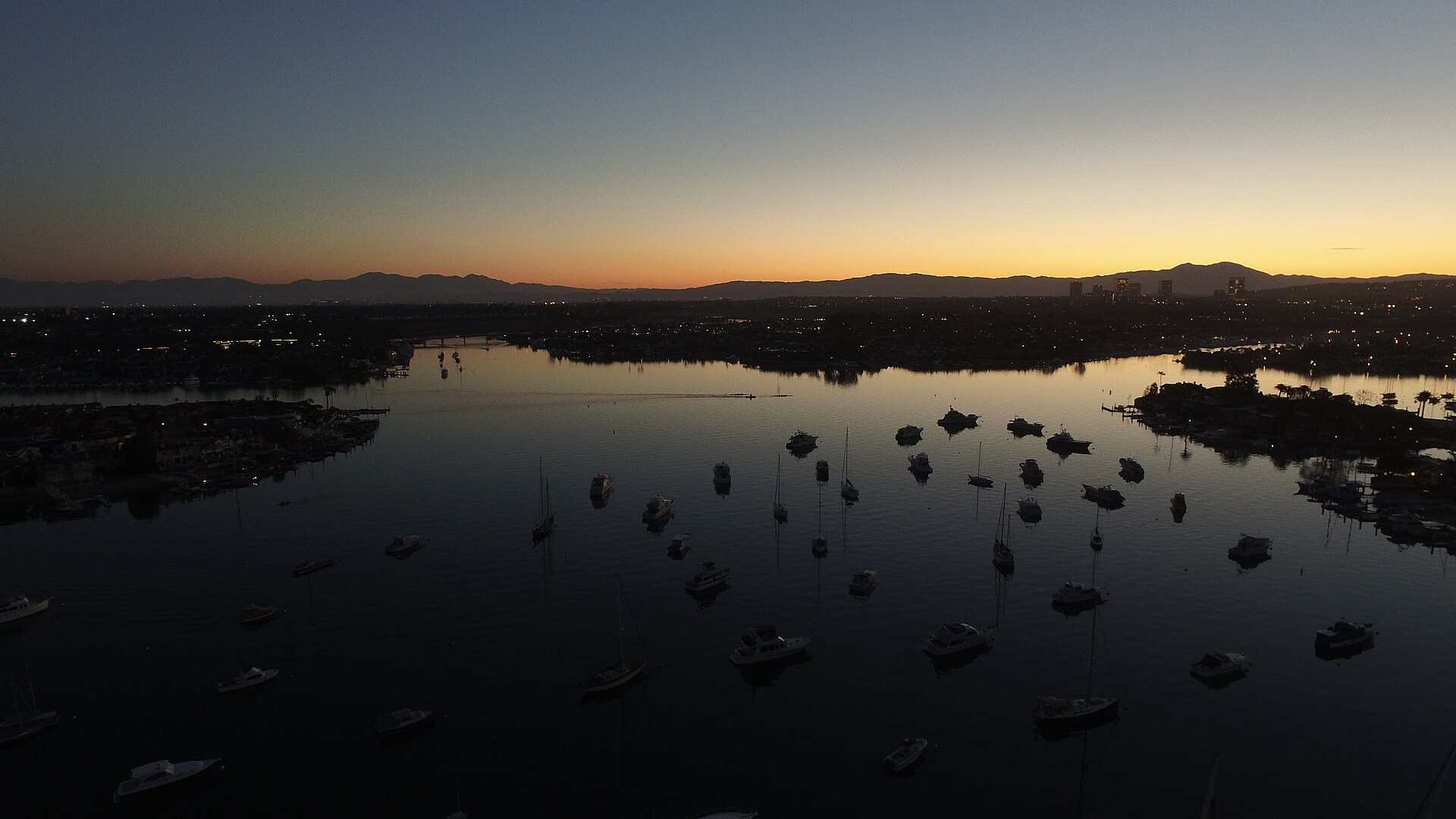
Newport Harbor at sunriseDon Ramey Logan · CC BY 4.0 · cropped
Sherman Library & Gardens on Pacific Coast Highway is one of Corona del Mar’s most distinctive institutions—a botanical garden and historical research library occupying a full block in the village, with seasonal displays, a tropical conservatory, a café and events throughout the year. For residents, it functions as a neighborhood garden that happens to be of regional interest.
Roger’s Gardens, just inland near the border with the hillside neighborhoods, is a well-known nursery and garden destination, especially during its seasonal displays. Together with the village’s galleries, boutiques and independent shops, it gives Corona del Mar a cultural texture beyond the beaches.
Daily life along Pacific Coast Highway covers the essentials: grocery stores, coffee shops, bakeries, salons, fitness studios, banks and a long list of restaurants ranging from casual breakfast spots to special-occasion dinners. Fashion Island and the larger Newport Center shopping and office district are a short drive west, which means Corona del Mar residents can keep their errands in the village or head to a full regional center in minutes.
Community traditions add to the sense of place. The Corona del Mar business community and residents organize seasonal events, and the village’s scale means people tend to see the same faces at the same coffee shops. For many residents, that familiarity is the real luxury.
Schools and family life
Corona del Mar is served by the Newport-Mesa Unified School District. The community is home to Corona del Mar Middle and High School, and nearby elementary schools such as Harbor View Elementary and Lincoln Elementary serve different parts of the area. School assignments depend on the specific address, and boundaries can change, so families should confirm the assigned schools for any home directly with the district before making decisions.
Private school options in and around Newport Beach add more choices, and many families combine the community’s parks, beaches, youth sports and junior lifeguard programs into a very active routine. The village’s walkability means older children can often get to the beach, school or a friend’s house without a car, which is part of why families value it.
- Which schools does the district currently assign to this exact address?
- How would a weekday morning commute to school and work actually look?
- Which parks, beaches and youth programs are within walking distance?
Getting around: traffic, parking and commutes
Pacific Coast Highway is both Corona del Mar’s main street and a regional route, which means it carries a lot of traffic, especially at commute times and on summer weekends. Residents learn the rhythms quickly: when to run errands, which cross streets make left turns easier and when to simply walk instead of drive.
For commuters, MacArthur Boulevard and Jamboree Road lead inland toward the 73 toll road, the 405 and John Wayne Airport, which is close enough to make frequent travel practical. The drive to Irvine’s business districts is typically manageable outside peak hours, while trips toward Los Angeles depend heavily on timing.
Parking deserves an honest mention. In the village, street parking near the beach fills quickly in summer, and many homes rely on alley garages. Before buying, it is worth visiting at the busiest times—a warm Saturday afternoon or a holiday weekend—to see what parking and traffic feel like on that specific block.
Building, remodeling and the coastal rules
Because so much of Corona del Mar was originally built as small cottages, rebuilding and remodeling are a constant part of the market. Anyone planning major work should understand that the community sits largely within the California coastal zone. Projects may involve Newport Beach planning review, coastal development permits and, in some neighborhoods, association architectural approval—each with its own timeline.
Rules about height, setbacks, lot coverage and view protection vary by location and zoning. Bluff-top lots can have additional requirements related to geology and public views. None of this makes building impossible; it simply means the time and cost of a project should be part of the purchase conversation, especially if the plan is to buy a home in order to rebuild it.
The practical step is to involve the right professionals early: an architect familiar with Newport Beach and coastal permitting, a geotechnical engineer for bluff or hillside lots, and a review of the property’s permit history. Knowing what you can realistically build is often as important as knowing what the home is worth today.
- Is the property in the coastal zone, and what permits would your plans require?
- What does the permit history show about past work?
- Are there association architectural guidelines in addition to city rules?
- For bluff or hillside lots, what does a geotechnical review recommend?
How to tour Corona del Mar like a local

Newport Beach and its harbor from aboveWPPilot · CC BY-SA 4.0 · cropped
The best way to learn Corona del Mar is on foot. Start with coffee on Pacific Coast Highway, walk down a flower street toward Ocean Boulevard, stop at Inspiration Point and follow the path to Little Corona if the tide is low. Then drive up into Harbor View Hills or Spyglass Hill to see how different the hillside neighborhoods feel just a few minutes away.
Visit twice if you can—once on a quiet weekday morning and once on a busy weekend afternoon. The community changes with the seasons and the crowds, and the version you would live with every day is a mix of both. Pay attention to the walk to the beach, the sound of the highway, the light at sunset and how the neighbors use their streets.
Finally, separate the lifestyle from the specific house. Corona del Mar offers a remarkable lifestyle, but every home inside it has its own trade-offs: lot, view, association, condition and future building potential. Falling in love with the village is easy; buying the right home within it takes a little more care.
The Mr_Newport perspective
Michael Mena, Douglas Elliman, California DRE #01948813, counts Corona del Mar among his primary areas alongside Newport Beach and Newport Coast. He reports more than $250 million in career sales volume and over 13 years of industry experience; those are owner-supplied career figures, not independently audited on this site.
If you are considering Corona del Mar, a useful first conversation starts with how you want to live—walk-everywhere village, bluff-top views, or quieter hillside space—then narrows to the specific neighborhoods that fit, their associations and rules, and a dated set of recent closed sales on comparable streets. Corona del Mar rewards buyers who read it block by block, and who see the village and the house as two separate decisions.